
Internet Safety Guide for People of Diverse Origins: Black, Latinx, Asian and Hispanic Communities
Practical online safety advice for Black, Latinx, Hispanic and Asian communities, covering targeted scams, harassment, misinformation and privacy.
Our reviews are independent. When you buy through links on this page we may earn a commission, which never changes our rankings. Read our disclosure.
Everyone faces online risks, but people of diverse origins often face extra ones: harassment because of race, ethnicity or religion; scams aimed at immigrant communities; and misinformation spread in community languages on messaging apps. In a Pew Research Center survey, about half of Hispanic adults said they had been harassed online, and Black and Hispanic targets were more likely than White targets to say they were harassed because of their race or ethnicity.
Key takeaways
- Learn the scams that target specific communities, such as immigration, remittance and job scams.
- Lock down privacy settings and limit the personal details you share publicly.
- Document, block and report harassment; you do not have to deal with it alone.
- Check news and health information in any language against trusted sources before sharing.
- Help older relatives and newcomers set up their devices safely, in the language they are most comfortable with.
The internet is also a powerful tool for these communities: staying in touch with family abroad, finding jobs and services, building businesses, organizing and sharing culture. The goal of online safety is not to pull back from that, but to use it with confidence.
This guide explains the most common online risks, the specific challenges diverse communities face, practical safety steps for individuals and families, guidance for communities of color, how to deal with harassment and hate, and where to get help, including support in languages other than English.
Common online risks
These threats affect everyone, and they are the foundation for everything else in this guide.
- Phishing: fake emails, texts and messages that trick you into clicking links, sharing passwords or paying money.
- Scams: impostors posing as government agencies, banks, employers, landlords, relatives or romantic partners.
- Identity theft: criminals using stolen personal details to open accounts, claim benefits or file taxes in your name.
- Account takeover: hackers getting into email, social media or messaging accounts, then scamming your contacts.
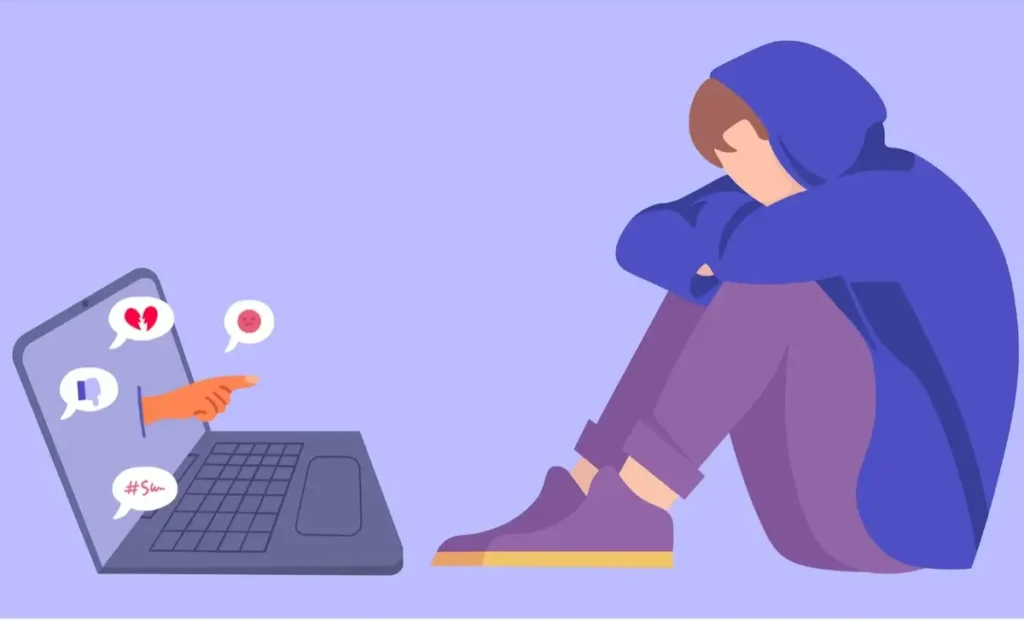
- Harassment and hate speech: abusive messages, threats, doxxing (publishing someone’s personal details) and coordinated attacks.
- Misinformation and disinformation: false or misleading content about health, elections, immigration and current events.
- Privacy loss: apps and data brokers collecting and selling information about your location, habits and contacts.
Intersectional challenges faced by diverse communities
Risks overlap and multiply. A person who is a recent immigrant, speaks English as a second language, works multiple jobs and is older may be targeted by several kinds of scams at once, with less time and fewer resources to check what is real. Researchers call this intersectionality: different parts of someone’s identity combine to shape their experience.
- Language barriers make it harder to spot fake official messages and to find help.
- Fear or distrust of authorities can stop people reporting scams or crimes, especially if they are worried about immigration status.
- Close-knit community networks are a strength, but scammers exploit them by posing as trusted community members or using group chats.
- Targeted advertising can push predatory loans, fake jobs or misleading offers to specific communities.
- Identity-based harassment combines racism with sexism, religious hatred or homophobia, and women of color are often targeted most intensely.
- Unequal access to fast internet, up-to-date devices or digital skills can increase exposure to risks.
The Federal Trade Commission has studied fraud in communities of color and found that some scam types, such as government impostor, income and job scams, are reported more often in majority Black and Latino communities, and that people in these communities often report through different channels. Reaching people in their own languages and through trusted community organizations makes a real difference.

Scams that target specific communities
Immigration and ‘notario’ scams
In many Latin American countries, a notario publico is a qualified legal professional. In the US, a notary public is not a lawyer and cannot give immigration advice. Scammers use this confusion to charge large fees for help that is useless or harmful, sometimes filing incorrect forms that damage someone’s case. Others pose as government officials and threaten deportation unless a ‘fine’ is paid.
- Only licensed attorneys and accredited representatives working for recognized organizations can give immigration legal advice. The Department of Justice publishes a list of recognized organizations and accredited representatives.
- USCIS does not accept payment by phone, gift card or wire transfer, and will not threaten you by phone.
- Never sign blank forms or documents you do not understand, and always get copies of everything filed.
- Get free or low-cost help from nonprofit legal aid organizations.
Remittance and money transfer scams
People who send money to family abroad are targeted with fake transfer services, phishing messages that look like real ones and ‘family emergency’ requests. Use well-known licensed services, double-check the recipient’s details, and confirm unexpected requests by calling your relative directly. The Consumer Financial Protection Bureau has rules that give you the right to a receipt and to cancel many international transfers within 30 minutes.
Job and income scams
Fake job ads promise easy work from home, then ask for training fees, equipment purchases or your bank details to ‘deposit a check’. Others recruit people as unwitting money mules. Real employers do not ask you to pay to work or to move money for them.
Rental and housing scams
Scammers copy real listings, offer below-market rent and ask for a deposit before you can view the property. Always see a property in person or verify the owner, and never pay with gift cards, wire transfers or cash apps to someone you have not met.
Romance and community trust scams
Scammers may pose as members of your community, faith group or home country, speaking your language and referencing shared culture to build trust quickly. Be wary of any new contact who soon asks for money or investment.
Financial safety online: banking, credit and predatory lending
Online financial products have made banking and borrowing more accessible, but they have also opened the door to predatory offers aimed at communities that have historically been underserved by traditional banks.
- Be wary of instant loan apps that charge very high fees or demand access to your contacts and photos; some use them to shame borrowers who fall behind.
- Check that lenders are licensed in your state before borrowing.
- Watch for ‘credit repair’ scams that charge upfront fees and promise to remove accurate negative information.
- Avoid investment ‘opportunities’ shared in group chats, especially cryptocurrency schemes that promise guaranteed returns.
- Use banks and credit unions insured by the FDIC or NCUA, and look for community development financial institutions (CDFIs) that serve your community.
- Turn on account alerts and review statements regularly for unfamiliar transactions.
Online safety for small business owners
Small businesses owned by immigrants and people of color are a backbone of many communities, and they are frequent targets for online fraud.
- Watch for fake invoices and payment changes: criminals impersonate suppliers and ask you to pay a new bank account. Always confirm changes by phone using a known number.
- Protect business email with strong passwords and two-factor authentication; business email compromise is one of the costliest cybercrimes reported to the FBI.
- Beware of fake government grant and loan offers that ask for fees or personal details.
- Secure your point-of-sale and payment systems and keep software updated.
- Train staff to spot phishing emails and suspicious calls.
- Respond calmly to fake or hateful reviews: report them to the platform rather than arguing publicly.
Internet safety tips for people of diverse origins
- Use strong, unique passwords with a password manager, and turn on two-factor authentication for email, banking and messaging apps.
- Keep phones and computers updated and use reliable antivirus with phishing protection.
- Set social media accounts to private and review who can see your posts, friends list and personal details.
- Use a VPN on public Wi-Fi in cafes, libraries and airports.
- Never pay anyone with gift cards, wire transfers or cryptocurrency because they asked you to by phone or message.
- Verify before you trust. Call organizations on numbers from their official websites, not numbers in messages.
- Protect your documents. Do not post photos of passports, visas, IDs or Social Security cards online.
- Turn on two-step verification in WhatsApp, WeChat, Telegram and other messaging apps to stop account takeovers.
Protecting your privacy from apps and data brokers
Many apps and websites collect far more information than they need, and data brokers combine it into detailed profiles that can be sold to advertisers, lenders and, sometimes, scammers. For people who already face discrimination or targeted harassment, that exposure carries extra risk.
- Review app permissions on your phone and turn off location, microphone, contacts and photo access for apps that do not need them.
- Limit ad tracking: on iPhone, choose ‘Ask App Not to Track’; on Android, delete your advertising ID in privacy settings.
- Opt out of people-search sites that publish addresses and phone numbers; several services help automate removal requests.
- Use privacy-friendly tools such as browsers with tracker blocking and a trustworthy VPN on public networks.
- Be careful with free apps that ask for unusual permissions, especially money-lending, translation and photo-editing apps.
- Check your credit reports at AnnualCreditReport.com for accounts you did not open, and consider a free credit freeze.
Using translation tools safely
Translation apps are a lifeline for many families, but they have limits. Machine translation can get legal, medical and financial terms wrong, and pasting sensitive documents into free online tools may share your personal information with the service.
- Use translation tools to understand general meaning, not to make legal or medical decisions.
- Ask for professional interpreters for healthcare, court and immigration matters; you often have a right to one free of charge.
- Avoid pasting passport numbers, Social Security numbers or bank details into translation apps.
- Be cautious of translation apps that request unusual permissions or show heavy advertising.
Internet safety guidelines for communities of color
- Verify immigration help: only accredited representatives and licensed attorneys can give immigration legal advice.
- Know how agencies contact you: US government agencies do not demand payment by gift card or threaten arrest by phone.
- Check health and election information against official sources such as the CDC, your state health department or your state election office, many of which publish information in several languages.
- Be cautious in group chats. Forwarded messages, especially those that say ‘share with everyone’, are a common route for misinformation and scams.
- Support each other: share warnings about new scams in community groups, in your languages, and help newcomers learn the warning signs.
- Use community organizations: libraries, community centers and faith groups often offer free digital skills classes.

Misinformation in community languages
False information often spreads fastest in languages other than English, because fact-checking and content moderation are weaker and messages travel through private family and community chats. Misinformation about vaccines, voting and immigration rules has repeatedly targeted Spanish-speaking, Chinese-speaking and other communities.
- Check the source: who created this message, and are they trustworthy?
- Look for official confirmation from government websites or established news outlets.
- Be wary of urgency: messages that say ‘share before it is deleted’ are a red flag.
- Check dates: old stories are often recirculated as new.
- Use fact-checkers that work in your language, many of which partner with messaging apps.
- Pause before forwarding, and gently share corrections when relatives send false information.
Election misinformation and voter intimidation
Communities of color have repeatedly been targeted by false information about voting: wrong election dates, claims that you can vote by text, false warnings that police or immigration officers will be at polling places, and messages designed to make people believe their vote will not count. These tactics aim to suppress turnout, and some are illegal.
- Get voting information only from your state or local election office, or from Vote.gov, which offers information in multiple languages.
- Remember that you cannot vote by text, phone call or social media message in US federal elections.
- Be suspicious of last-minute messages about changed dates, locations or rules, and check them with official sources.
- Report voter intimidation or misleading voting information to your state election office and the Department of Justice Civil Rights Division.
- Help family members find accurate information in their preferred language.
How to ensure protection against cyberbullying and harassment
Online harassment based on race, ethnicity, religion or accent is unfortunately common, from racist comments to coordinated attacks and doxxing. You have options, and you do not have to face it alone.
- Do not engage with the harasser; responding often escalates the attack.
- Document everything: screenshots with usernames, dates and links, before content is deleted.
- Block and report on the platform, using hate speech reporting options where available.
- Tighten privacy settings and remove personal details such as your address, workplace or family names.
- Ask friends to help report content and monitor for you if attacks are overwhelming.
- Report threats to local police, and potential hate crimes to the FBI at tips.fbi.gov.
- Look after your wellbeing. Take breaks, talk to people you trust and seek support from counselors or community organizations.

Protecting yourself from doxxing
- Search your name to see what personal information is public.
- Request removal from people-search and data broker sites.
- Use separate email addresses for public and private accounts.
- Avoid sharing your location in real time, and remove location data from photos.
- If you are doxxed, contact the platform, document it and consider reporting to police.
Coping with online racism and hate
Experiencing racism online, whether directed at you personally or seen in comments and news, can take a real emotional toll. Repeated exposure is linked to stress, anxiety and feelings of isolation.
- Set boundaries: mute words, hide comments and step away from platforms when you need to.
- Curate your feeds: follow people and communities that support and uplift you.
- Talk about it with friends, family or community groups who understand.
- Seek professional support if distress affects sleep, work or daily life; many therapists specialize in race-based stress, and some offer services in multiple languages.
- Remember it is not your fault. Harassment says everything about the harasser and nothing about you.
- In a crisis, call or text 988 for the Suicide and Crisis Lifeline, which offers support in Spanish and through interpreters.
Staying safe in faith communities online
Places of worship increasingly stream services and run online groups, which is wonderful for connection but can expose communities to harassment, ‘zoom-bombing’ and scams that impersonate religious leaders asking for donations or gift cards.
- Use waiting rooms and host controls for online services and meetings.
- Verify any donation request from a leader through a separate, known channel.
- Do not publish members’ names, addresses or photos without permission.
- Report threats against religious communities to police and the FBI.
- Appoint a volunteer to monitor and moderate online spaces.
Helping older relatives and newcomers stay safe
Older relatives and recent arrivals are often the most targeted, and family members are best placed to help.
- Set up their devices with automatic updates, security software and strong passwords.
- Explain common scams in their language, using real examples.
- Agree that they will check with you before sending money to anyone new.
- Turn on spam call filtering and two-step verification in messaging apps.
- Show them how to block and report numbers and accounts.
- See our guide to elder financial exploitation for more.
Protecting children in multilingual and immigrant families
Children often become the ‘tech experts’ in immigrant families, helping parents with forms, apps and translation. That is a valuable skill, but it can also leave children handling adult responsibilities online, and parents less able to supervise.
- Learn the apps your children use, even at a basic level, and ask them to show you.
- Use built-in tools such as Apple Screen Time or Google Family Link, which are available in many languages.
- Talk about online racism and bullying, and make sure children know they can tell you about it.
- Avoid asking children to handle sensitive financial or legal matters online on your behalf.
- Use free school and library resources on digital safety, many of which offer materials for parents in several languages.
- See our internet safety guide for students for more advice.
A quick online safety checklist for your household
- Every device updated and protected with a screen lock.
- Security software installed on computers.
- Unique passwords stored in a password manager.
- Two-factor or two-step verification on email, banking and messaging apps.
- Social media accounts set to private.
- Spam call and message filtering turned on.
- Credit frozen at all three bureaus, or at least checked regularly.
- A family agreement to check before sending money to anyone new.
- Trusted sources bookmarked for health, election and immigration information.
- Contact details saved for the FTC, the FBI and a local legal aid organization.
Where to get help
- Federal Trade Commission: report scams at ReportFraud.ftc.gov; information is available in Spanish and other languages.
- FBI: report online fraud at ic3.gov and hate crimes at tips.fbi.gov.
- USCIS: information on avoiding immigration scams, in multiple languages.
- Consumer Financial Protection Bureau: help with remittance problems and financial scams.
- Local legal aid organizations: free or low-cost immigration and consumer legal help.
- Community and civil rights organizations that track and support targets of online hate.
Frequently asked questions
Where can I report online hate or harassment?
Report it on the platform first. Report threats to local police, and potential hate crimes to the FBI at tips.fbi.gov. Keep copies of everything.
How can I spot an immigration scam?
Be wary of anyone who is not a licensed attorney or accredited representative offering legal help, guarantees results or asks for cash. Government agencies never ask for payment by gift card or threaten you by phone.
Will reporting a scam affect my immigration status?
Reporting fraud to the FTC or police is meant to protect consumers. If you are worried, speak to a trusted legal aid organization first; some protections exist for crime victims.
How can I help older relatives stay safe online?
Set up their devices with updates, antivirus and strong passwords, explain common scams in their language and agree that they will check with you before sending money.
Final thoughts
Online safety is for everyone, but some communities face extra risks. Learn the scams that target your community, protect your accounts and personal information, check news before sharing and report harassment. Sharing what you learn, in the languages your community speaks, helps protect everyone around you.